
How a Hard Workout Prepares You for Labor Contractions
BY: REBECCA BELENKY OF LOS ANGELES BIRTH
This article explores the similarities and differences between coping with intense workouts and coping with labor contractions. It highlights familiar physical and mental tools people already use and reframes labor as a process that draws on existing strengths rather than requiring new or mysterious skills.
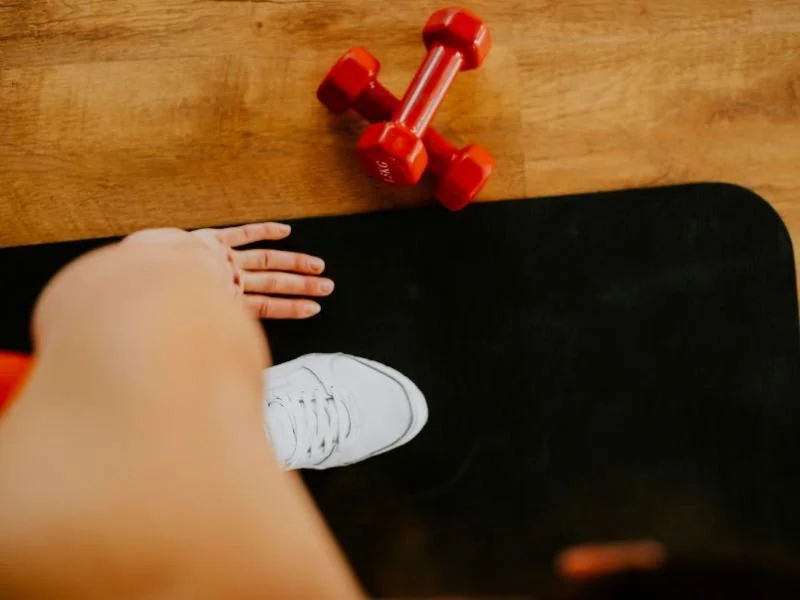
The Challenge of a workout can be like the challenge of labor
Today at the YMCA in South Pasadena, I found myself in one of those workout classes.
You know the kind of class where you are questioning your life choices, why you even bothered to show up, and looking at the clock only to realize you are just ten minutes into the class.
Your muscles are already shaking from these crazy squats. And the little voice in your head starts saying things like, “Is this over yet?”
While I was standing there, desperately wanting it to be over, I had a moment of recognition.
This is so much like labor.
Of course, I know that labor is not the same as a workout you sign up for on a calendar. You usually do not get to choose the day or time when your labor begins or ends. There is much more at stake in labor and birth, and it is a life-changing experience.
But the parallel I’m considering is the experience of finding your way through something very challenging. How do we do it? What keeps us going?
How do we talk to ourselves when things get hard? How can breathing, sound, and focus make something more manageable? Remaining curious about how you navigate physical challenges of an intense workout is a great way to practice the skills needed for labor.
Intensity Is Intensity
Some birth preparation can makes labor coping feel mystical or abstract when it comes to coping during contractions.
But the truth is, most of us already use powerful coping tools every day.
We use them when we work out.
When we go on a long, challenging hike.
When we push through a complicated yoga sequence.
When we carry something very heavy for longer than we think we can.
When we push through the final stretch of a run.
Many clients tell me, “I do not know if I will be able to cope with contractions because I have never been in labor before.” Labor contractions are intense, yes, but so are many physical challenges we willingly sign up for (sometimes just for fun?). The context is different, but your ability to cope remains.
In labor, contractions are made by your body. Your hormones are flowing, and the uterus responds by contracting, opening, and then pressing your baby down and out of your body. Your role is to allow it to unfold. It is less about you DOING, and more about surrendering to the intensity.
But when you recognize how often you already move through challenge, labor becomes less about the pressure to learn a brand new technique and more about remembering what you already know how to do.
Vocalization: Letting Sound Do Some of the Work
In the workout class, I made noise to get through the times when another rep felt unmanageable.
A grunt.
A low groan.
I hummed while I completed the last few reps.
When I am focused and in the zone, these sounds come out without conscious effort.
Similarly, in labor, low sounds, moans, hums, and even complaints are not signs of failure. Instead, they are signs of coping well. It gives intensity somewhere to go instead of holding it inside. That release also helps relax the jaw, throat, tongue, and pelvic floor.
Some people are surprised by the primal noises they make during labor if they are not prepared. Knowing that vocalization is a natural response to the intensity of labor and that it is purposeful may allow you to let the sound out.
Breath: The Energy That Keeps You Flowing
When the workout became difficult, my attention naturally shifted to my breathing.
Not fancy breathing.
Simple breathing connected to my motion.
Not calm or particularly zen, often pretty noisy.
Inhale. Exhale. Again and again. Until I got a break.
Breathing does two essential things in both workouts and labor. It keeps oxygen flowing to the muscles doing the work, and it gives the mind something steady to focus on when things feel challenging.
In labor, breathing with a contraction rather than fighting it and holding your breath can dramatically change how intense it feels. Staying present to the breath gives you a rhythm to focus on while the contraction comes and then goes.
There is another crucial difference here. A workout often asks for continuous effort over a set period of time. Labor does not. Labor comes in waves. Contractions build, peak, and pass. In between contractions, there are minutes (ranging from 2 to 20, depending on where you are in the process) when the body rests and resets. Those pauses are not minor. They are what make laboring for many hours (sometimes days) possible.
Point of Focus: Giving Your Mind Somewhere to Look
Another thing I noticed was how often my eyes searched for something to focus on.
Sometimes it was my own face in the mirror, watching
Other times it was a spot on the floor or a line on the wall.
This is a powerful coping strategy that shows up in labor all the time.
A focal point gives the mind something to do. It keeps attention anchored in the present moment rather than jumping ahead to the unknown.
In labor, that focal point might be a partner’s eyes, a shirt button, a photo, a candle, or a spot on the wall. If you find this kind of focus helpful, it may help you in labor as well.
Encouragement: Borrowing Strength When Yours Feels Thin
At various points in the workout, the instructor’s voice rang out in the room.
“Keep Going”
“Just a few more.”
“Stay with me.”
Even the moans and complaints from my exercise neighbors inspired me to carry on. Knowing I was not the only one feeling frustrated and tired helped me keep going; they shared my sentiment.
In labor, encouragement from your partner may look like:
A calm voice.
An assurance that the contraction will end.
A calming affirmation that you are doing it.
A steady presence that says, “I’m right here with you.”
Having a birth partner or doula encouraging you through labor is both motivating and supports co-regulation of the nervous system. When someone else is present to witness your challenge while remaining grounded, it sends signals of safety. Safety allows the hormones of labor to flow and increases positive feelings about your experience.
Wanting to Stop Does Not Mean You Cannot Continue
One of the most important parallels I noticed was:
Wanting to stop does not mean you need to stop.
During the workout, my body was very clear about wanting out. But I also knew, deep down, that I could keep going.
In labor, this moment often shows up when people say things like, “I can’t do this,” or “I want it to stop.” This can be a fine line to walk as a doula; you want to listen to your client's feedback, but often people complain and swear during contractions, and then rest peacefully between them. So when are they coping, and when might an epidural be the “opt-out” that they are looking for?
In labor, wanting to stop may indicate that something is intensifying, and that you need more focused support from your partner or doula. If you are giving birth- reach out for more support when these feelings rise. If you are a birth partner reading this- These phrases are your partner asking for more from you. Lean in and focus your attention on soothing and your prescense.
Birthing Your Way Means Trusting Your Own Coping Style
One of the things I love most about working with families as a doula is the diversity of approaches. There is no single right way to cope with labor. There is only what works for you, and it can even shift through the same labor.
Some people are quiet.
Some are loud like animals.
Some want touch.
Some want space.
Some focus inward.
Some rely heavily on encouragement.
Birthing your way means understanding your natural coping tools and leaning into them confidently.
Final Thoughts
Comparing labor contractions to a hard workout is not intended to oversimplify coping with labor, but to remind you that you already have lived experience with intensity, discomfort, and moving through challenge. You already know how to breathe, focus, vocalize, rest, and accept support when things get hard.
As a Los Angeles birth doula, my role is to help you recognize and trust the strength that is already there, and to be with you as your body does this profound work.
You have done hard things before.
And you don't need to do this one alone.
Birthing your way starts with trusting yourself.
Continue Exploring Birth, Labor, and Support in Los Angeles
✨ If you’d like more practical, real-life prenatal support from Los Angeles Birth, here are additional birth and postpartum resources for Los Angeles families:
How a Doula Supports You With an Epidural
Explains how doulas support you before, during, and after an epidural, and why continuous, personalized care remains valuable throughout a medicated birth.
When Will I Go Into Labor? Berries on the Vine
A gentle, reassuring look at how labor timing actually works, and why waiting for labor can feel emotionally challenging.Healthy Spiced Banana Bread Muffins
A simple, nourishing recipe that’s easy to prep ahead and perfect for postpartum families
The Best Energy Balls for Birth & Postpartum
My no-bake energy balls with protein—quick to make, and loved by postpartum families.
About Rebecca Belenky
Rebecca Belenky is a Los Angeles–based doula, childbirth educator, and lactation educator who has supported families since 2014. Through her practice, Los Angeles Birth, she offers compassionate, trauma-informed care that helps parents feel informed, grounded, and confident through pregnancy, birth, and postpartum.
